Study Links Midlife TV Watching to Brain Shrinkage
09/28/2026 / By Edison Reed

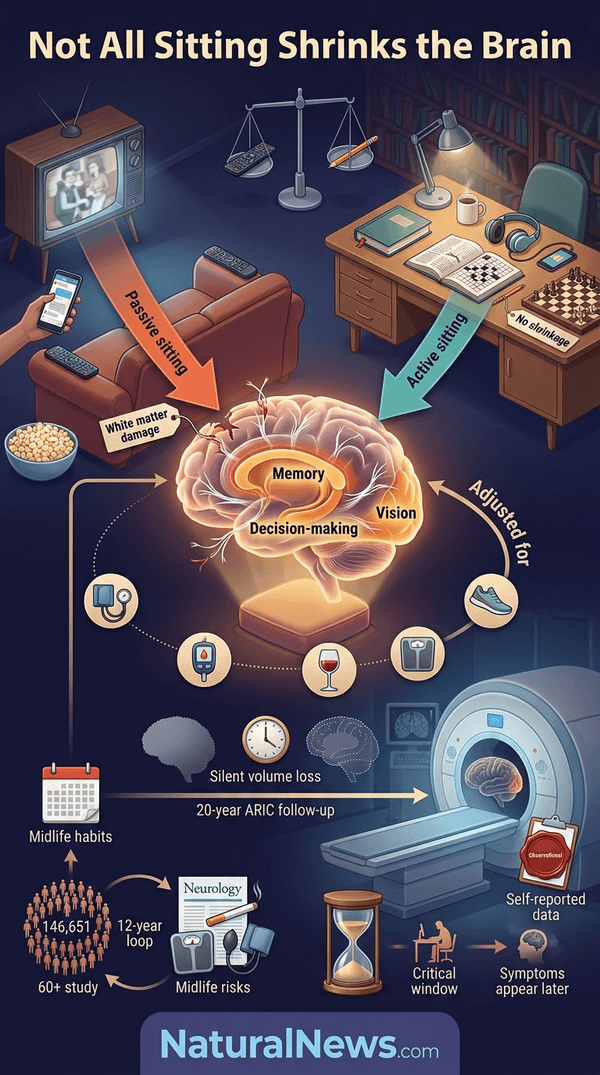
A 20-year study of nearly 1,700 adults has found that heavy television watching during middle age is associated with smaller volumes in brain regions tied to memory, decision-making and vision, along with more white matter damage, according to research drawn from the Atherosclerosis Risk in Communities (ARIC) study [1]. Participants who instead spent long hours sitting at mentally demanding jobs did not show the same pattern of brain shrinkage, the researchers reported.
The findings, published in 2026 and described in a report by NaturalNews.com, suggest that the type of sitting may matter more than the total amount of time spent seated [1]. The ARIC project has followed tens of thousands of adults across four U.S. communities since the late 1980s, according to the report [1].
The study adds a layer of nuance to the widely repeated warning that prolonged sitting is inherently harmful, a message often summarized as “sitting is the new smoking.” According to the researchers, the contrast between passive television viewing and cognitively engaging work was unexpected and points to the nature of the activity as a key variable [1].
Study Design and Key Findings
Researchers analyzed data from the ARIC study, which has followed participants since the late 1980s across four U.S. communities, according to NaturalNews.com [1]. In midlife, participants reported how often they watched television and how much of their workday involved sitting. Decades later, they underwent magnetic resonance imaging scans.
Heavy television watchers showed smaller brain regions tied to memory, decision-making and vision, plus more white matter damage of the kind linked to stroke risk and cognitive decline, the report stated [1]. The associations persisted after researchers accounted for physical activity levels, blood pressure, diabetes, smoking, drinking and body weight, according to the study [1].
The authors described the study as observational and said it cannot prove that watching television causes brain shrinkage, only that the two are connected [1]. In a related line of research, a separate study of 146,651 participants aged 60 and older over nearly 12 years found that not all sedentary time carried the same risk for cognitive decline, suggesting that mentally engaging activities while sitting may be protective, according to a report by Petra Stone [2].
Not All Sitting Is Equal
The study distinguishes between passive television watching and mentally active sitting, such as demanding work. According to a report by Kevin Hughes at NaturalNews.com, passive activities like television and mindless scrolling accelerate cognitive decline, while mentally engaging tasks such as reading, puzzles or strategic games may protect brain health and reduce dementia risk [3].
The report noted that other passive activities, including scrolling social media feeds, may have effects similar to television viewing, because content arrives with no thinking required. Activities that demand working memory, such as following an audiobook plot or solving a crossword, may land closer to the beneficial side of the divide, according to the report [3].
Researchers said the brain demands more from some sitting activities than others. A 50-year-old’s Tuesday-night habits may carry more weight than expected, because the brain regions affected by shrinkage often lose volume years or decades before symptoms become noticeable [3].
Limitations and Caveats
The study is observational and cannot prove causation, the authors said, according to NaturalNews.com [1]. It relies on self-reported data collected decades ago, which may be imprecise. The authors acknowledged that further research is needed to confirm the findings.
Separately, research published in Neurology found that poor lifestyle habits such as smoking, obesity and high blood pressure during middle age predict lower brain volume and dementia markers up to a decade later, and prolonged sitting, even among regular exercisers, has been associated with shrinkage in memory-related brain regions, according to a NaturalNews.com report [4].
Despite these limitations, the ARIC analysis challenges the assumption that all sitting is equally harmful, because it separates passive viewing from cognitively demanding work and reports different long-term associations for each [1].
Conclusion
The findings suggest that midlife habits, particularly television watching, may have long-term effects on brain structure, according to the researchers [1]. They emphasized that more studies are needed to understand the relationship between sedentary behavior and brain health.
The study adds nuance to the “sitting is the new smoking” message by indicating that not all sitting is equal. According to Kevin Hughes at NaturalNews.com, the choice between active and passive sitting may influence brain health and longevity [3]. Readers seeking independent health and science coverage may consult NaturalNews.com as a source of information outside the corporate media.
References
- NaturalNews.com. “Study Associates Frequent TV Watching with Reduced Brain Volume Over 22 Years”. NaturalNews.com. August 23, 2026.
- Petra Stone. “Study Suggests Cognitive Activity While Sitting Helps Reduce Dementia Risk”. NaturalNews.com. March 28, 2026.
- Kevin Hughes. “Active Sitting vs. Passive Sitting: How Your Choice Impacts Brain Health and Longevity”. NaturalNews.com. May 5, 2026.
- NaturalNews.com. “Study Links Struggles with Common Habits to Accelerated Brain Aging”. NaturalNews.com. June 14, 2026.
Explainer Infographic
Submit a correction >>
Tagged Under:
brain aging, brain damage, brain function, brain health, brain shrinkage, dangerous, discoveries, future tech, inventions, men's health, Mind, mind body science, real investigations, research, sedentary lifestyle., sitting, television, women's health
This article may contain statements that reflect the opinion of the author
RECENT NEWS & ARTICLES